Gulf workers among global leaders in AI and Gen AI adoption at work, BCG finds

Employees across the Gulf are embracing AI at rates among the highest in the world, according to a new report from Boston Consulting Group, which also points to growing awareness of agentic AI.
The fourth edition of Boston Consulting Group’s global report, titled ‘Strategy Matters More than Tools’, found that the vast majority – 93% of frontline employees and 95% of managers and leaders – in the region now use AI several times a week or more.
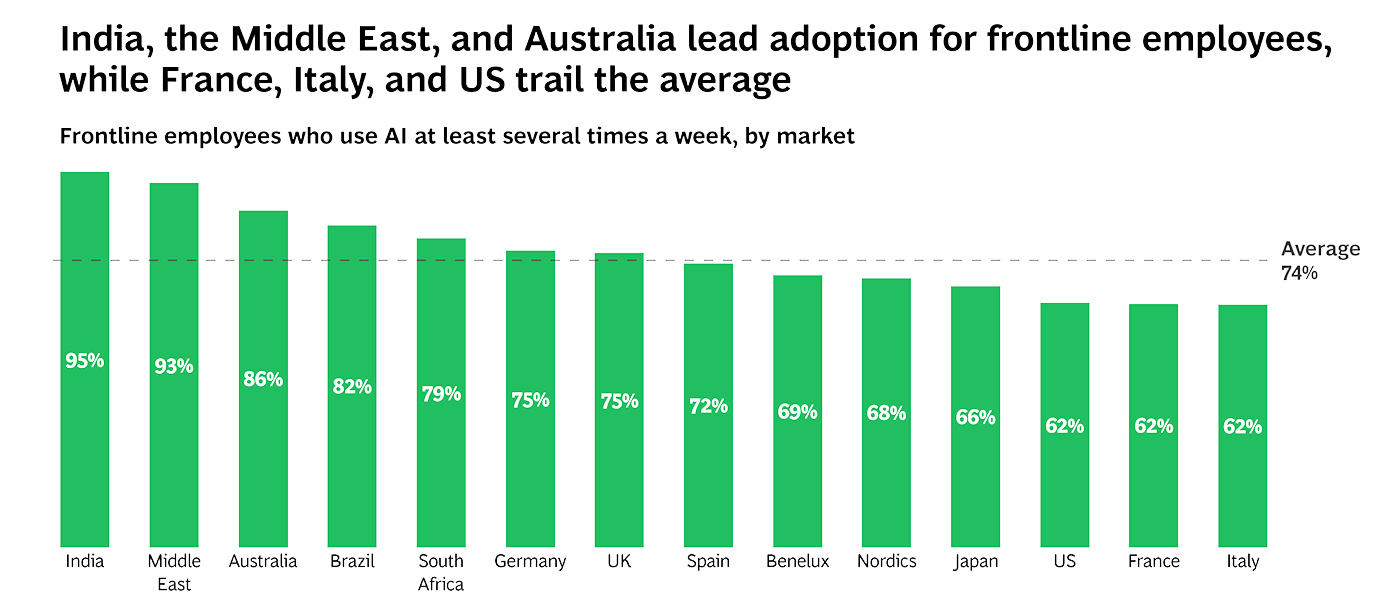
The study, which drew on responses from workers in the UAE, Saudi Arabia, Kuwait, and Qatar, positions the Gulf alongside India as a global leader in workplace AI use. Regional adoption now exceeds the worldwide average of 74% among frontline workers.
A handful of individual markets, including Brazil and South Africa, posted even higher country-level numbers, but the Gulf states together still rank among the top users of AI, well ahead of markets such as France, Italy, and the United States, which trailed the global average.
These findings are reflected in time savings. In the Gulf, 58% of frontline employees and 67% of managers and leaders reported saving at least eight hours a week because of AI tools, a significant amount of work time for an average week.
“The GCC’s exceptional AI adoption rates reflect a workforce that has moved decisively beyond experimentation into real integration,” said Robert Xu, a managing director and partner at BCG X, the digital arm of Boston Consulting Group (BCG).
“What distinguishes the highest-performing organizations in this region is not simply their deployment of AI tools, but their deep investment in their people. Compared to other organizations in their cohort, GCC organizations that lead with AI have leaders personally invested in building their teams’ AI fluency, resulting in tangible productivity gains and turning technological advantage into competitive edge.”
Skills and satisfaction shift
Beyond raw usage, the report found that AI is changing what is expected of workers. In the region, 85% of frontline employees and 92% of managers and leaders said AI has altered the skills their roles demand. That shift has not soured morale. Instead, 69% of frontline employees and 77% of managers and leaders in the Gulf said they feel more joy at work since adopting AI tools, according to the report.
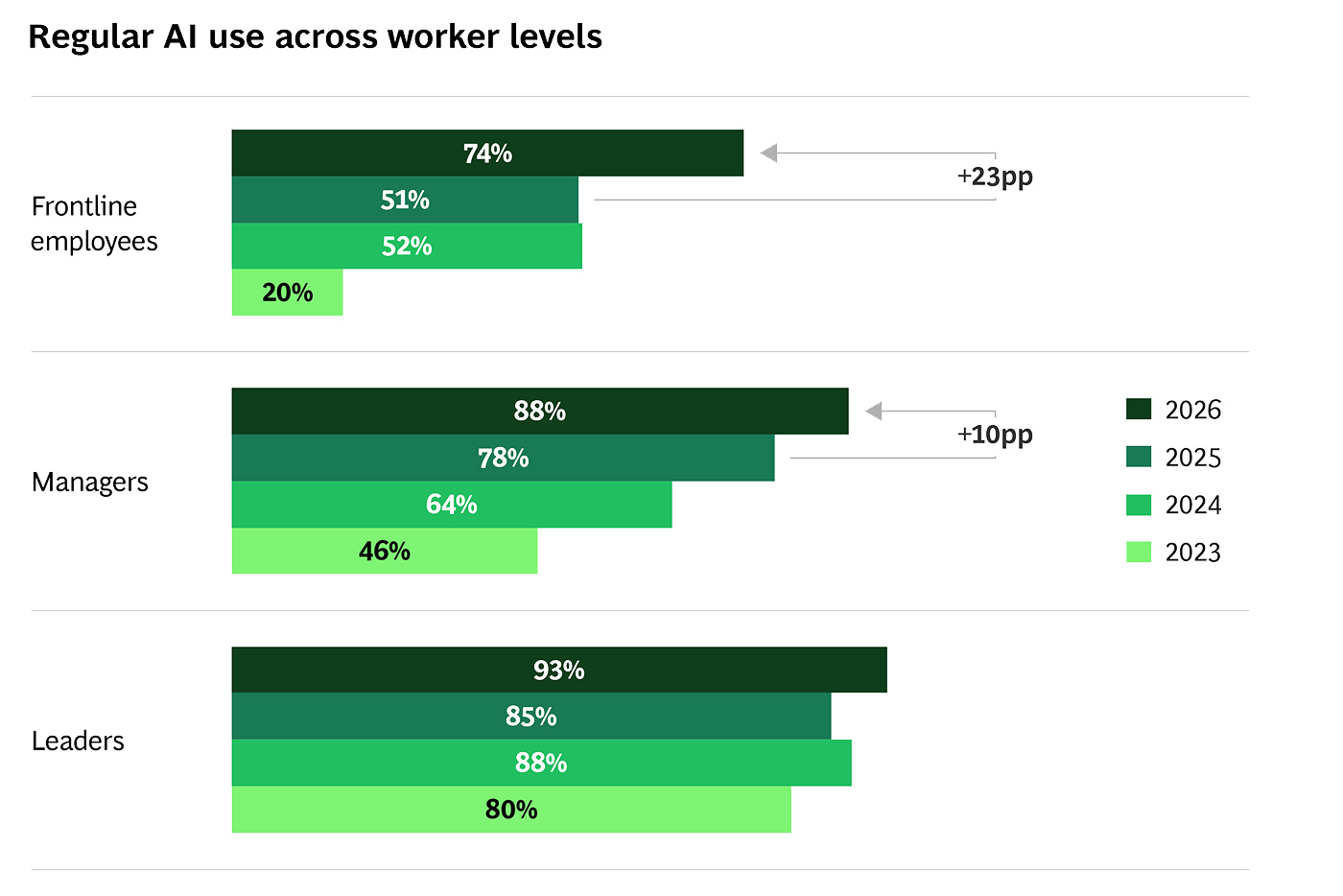
Globally, AI use has increased most rapidly among frontline employees, with the percentage of those that regularly use AI tools jumping from just 20% in 2023 to 74% in 2026. The percentage of managers that reported using AI nearly doubled within the same time span.
Agents seen taking on real work
Looking ahead, workers expect AI agents, systems capable of completing tasks with limited human input, to take on a substantial share of their jobs. Across the Gulf, 60% of frontline employees and 66% of managers and leaders believe AI agents could handle at least half of their current responsibilities within three years.
When asked if they have heard about AI agents, the percentage of those that said they have increased dramatically since last year, with the vast majority of manages and leaders noting they are aware of AI agents.
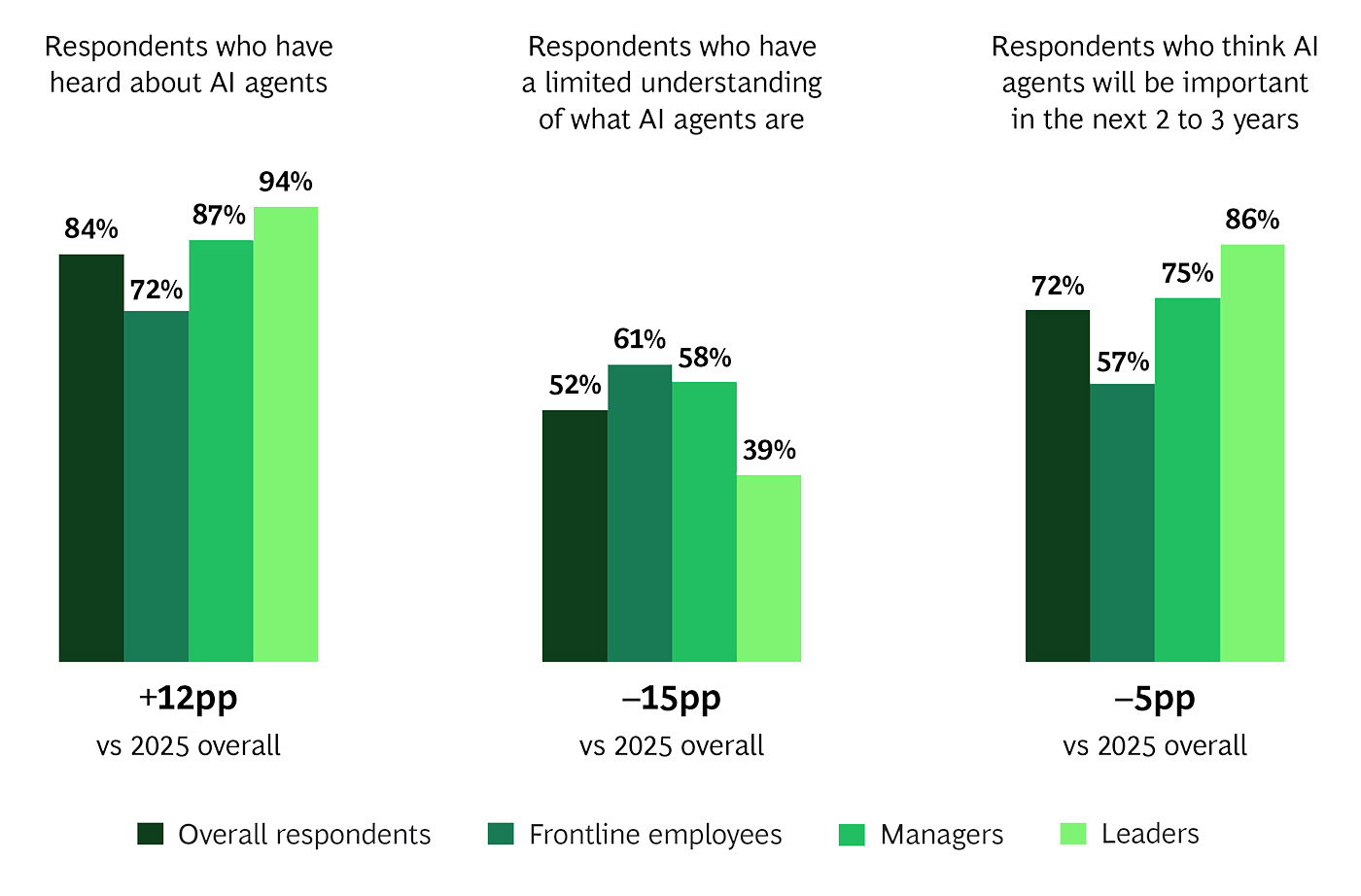
Worldwide, the integration of AI agents into daily workflows has more than doubled since 2025, though BCG cautioned that governance rules covering oversight and accountability have not kept pace with the technology.
Despite that shift, fear of job loss remains limited. Only 28% of frontline employees and 29% of managers and leaders in the region said they worry AI could take their jobs, a sign that many see the technology as a help rather than a threat.
Training remains the gap
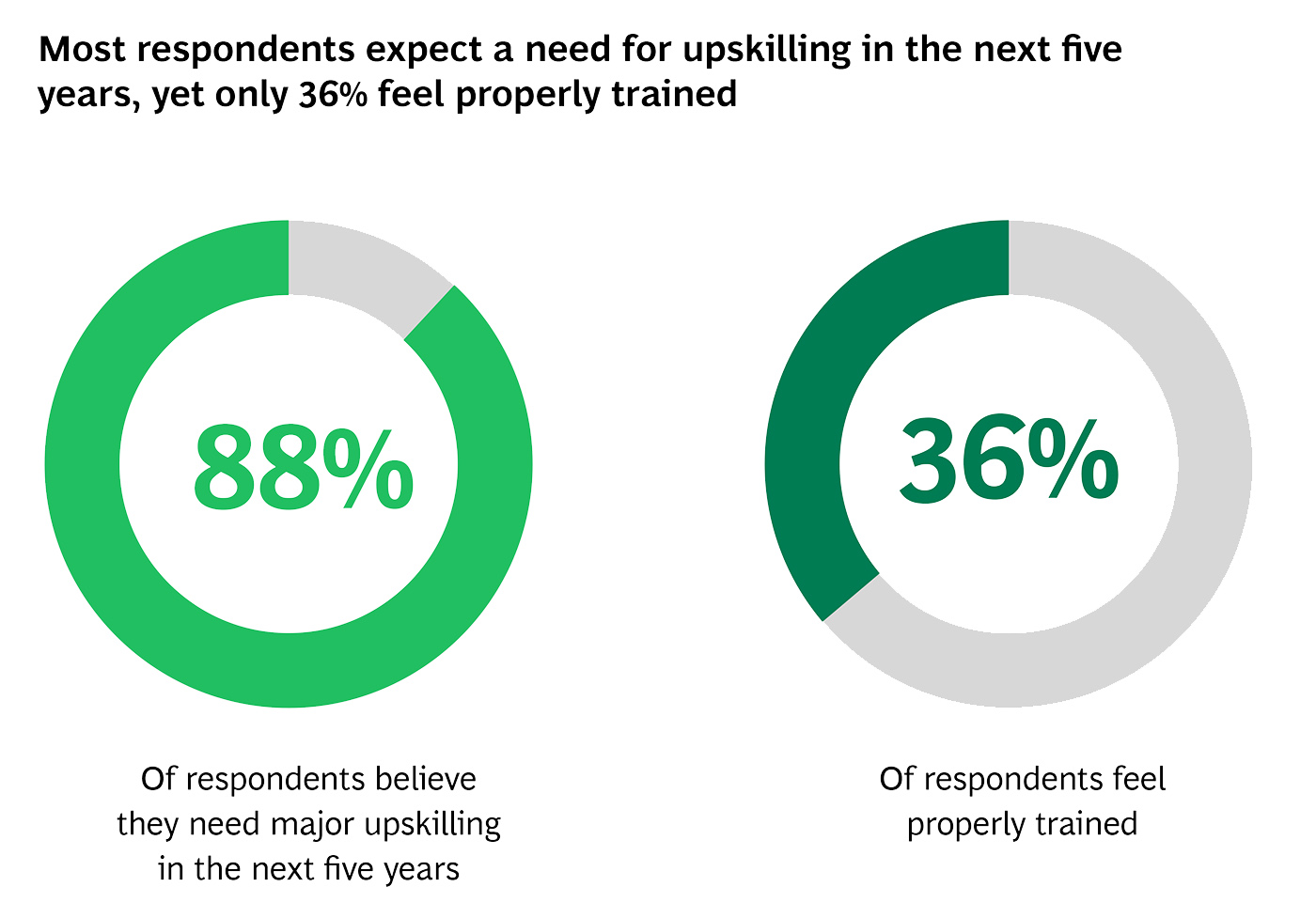
Despite increased usage of these tools, BCG’s global findings point to a persistent shortfall in preparation. For example, only 36% of respondents worldwide said they felt adequately trained for the shift, even though 72% of regular AI users said skill expectations have changed significantly. Just 33% of frontline employees globally said leadership communicates clearly about AI, and only 28% saw strong alignment between what leaders say and what their organizations actually do.
Rami Mourtada, a partner and director at Boston Consulting Group in its Dubai office, said the rapid early phase of AI adoption will only hold up if leaders take deliberate action.
“Lasting workplace satisfaction, and related business impact, emerge when leaders provide strategic guidance and ensure alignment between organizational messages on AI and actual day-to-day employee responsibilities. In the GCC, where adoption has notably accelerated, it’s imperative to build the proper core operating models and governance structures to transform individual productivity gains from AI into organization-wide benefits.”
The findings from BCG’s report suggest the Gulf may have reached a turning point when it comes to AI. The region has already established itself as an adoption leader, but the advantage going forward will depend on strategy and human capital rather than on tools alone.