Global Islamic finance assets reach $6.5 trillion as industry spreads to new markets

The global Islamic finance sector grew by 9% in 2025 to reach $6.5 trillion in assets, making it a growing force in the world economy with over 2,350 institutions and a presence in close to 100 countries.
The industry is projected to pass $10.5 trillion by 2030, even as conflict in the Middle East creates a new set of serious risks. That is according to data in a new report from the London Stock Exchange Group (LSEG), produced in collaboration with the Islamic Corporation for the Development of the Private Sector (ICD), which ranks 140 countries on the strength of their Islamic finance industries.
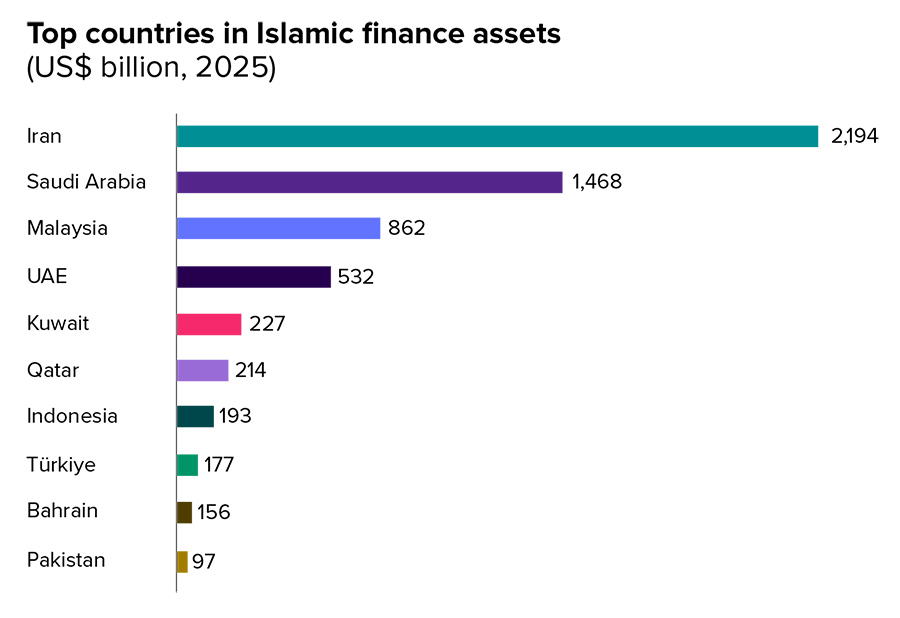
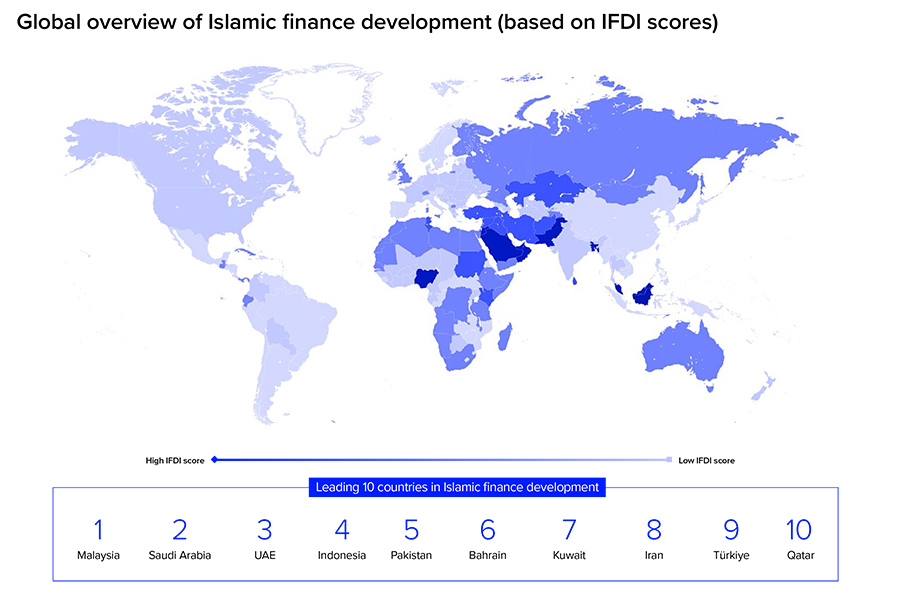
The global score has risen, with 71% of countries recording gains over the previous year. Malaysia, Saudi Arabia, the UAE, Indonesia, and Pakistan kept their places as the five most developed markets. The ranking measures overall development, including governance, sustainability, knowledge, and awareness, rather than size alone. Iran leads the way in total financial assets, followed by Saudi Arabia.
What is Islamic finance?
Islamic finance is banking, investing, and insurance that follows Shariah, or Islamic law. Think of it as halal finance. Its central rule is a ban on charging or paying interest. Instead of lending money and collecting interest, an Islamic bank might buy an asset, such as a house, and sell it to a customer at an agreed profit.
Islamic financial institutions might also share the profits and losses of a business with a partner. The rules also prohibit gambling-like speculation and financing of activities considered harmful.
Two other terms appear often in the world of Islamic finance: Sukuk are Islamic bonds that give investors partial ownership of an asset rather than a simple claim on a debt. Takaful is a form of insurance in which members pool contributions to cover one another’s losses.
Banks lead, but funds grow fastest
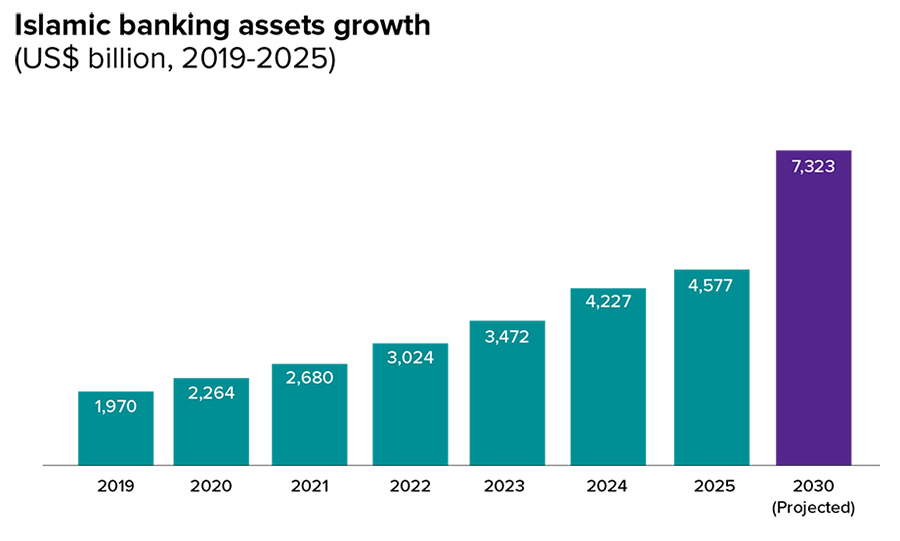
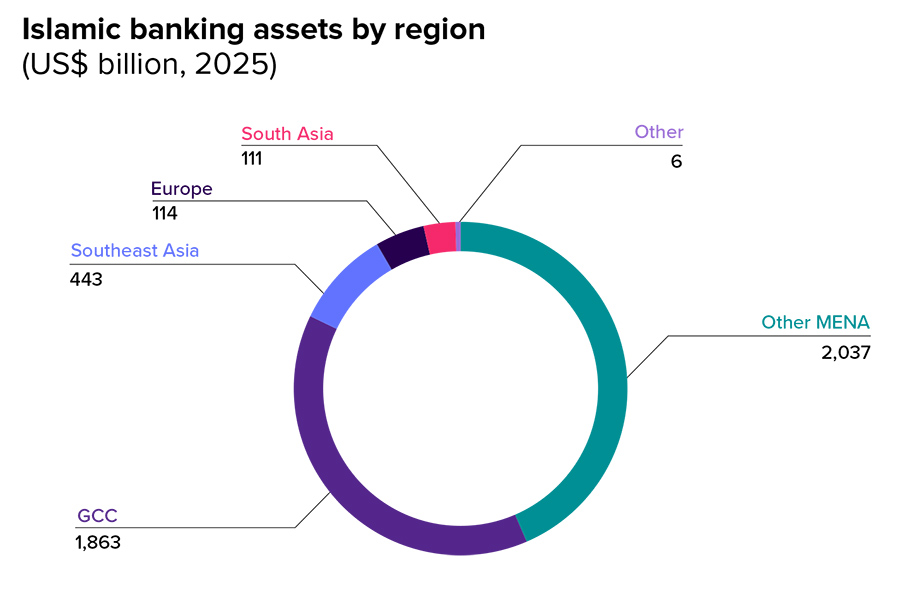
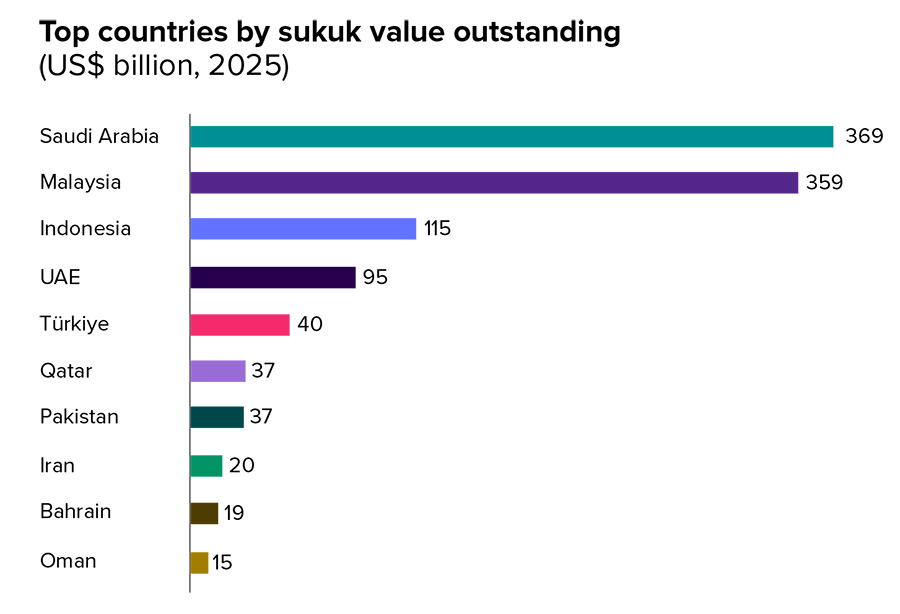
Islamic banking remains the largest part of the industry, with $4.6 trillion in assets, or 71% of the total. Sukuk outstanding rose 11% to more than $1.1 trillion, and issuance hit a record $291.4 billion. Saudi Arabia became the world’s largest sukuk market by value outstanding.
Islamic investment funds grew fastest, jumping 22% to $375 billion, helped by strong stock markets. Takaful assets increased 9% to $146 billion. Other Islamic financial institutions, including financing companies, leasing firms, and microfinance lenders, expanded 12% to $217 billion.
Sustainability also gained ground. Sukuk raising money for environmental and social goals reached a record $23.8 billion in 2025, and 60 countries now have sustainability guidelines for Islamic finance.
New frontiers, new risks
Most Islamic finance assets remain concentrated in the Gulf, Southeast Asia, and the wider Middle East and North Africa. Iran holds the most, at $2.2 trillion, followed by Saudi Arabia at $1.5 trillion and Malaysia at $862 billion.
New growth is emerging elsewhere. Sixty countries now have at least one form of Islamic finance regulation, with new frameworks introduced in Somalia, Tanzania, and Mozambique. Ghana released guidelines for what it calls non-interest banking in January 2026, and Uzbekistan is building its own legal framework. Across Africa and Central Asia, officials see Islamic finance as a way to widen access to financial services and support small businesses.
The report also warns that the industry is not immune to outside shocks. The Middle East conflict has brought energy price swings, rising inflation, and disruption to trade and investment.
“Conflict in the Middle East highlights uneven risks across Islamic banking markets,” the report notes.
“The impact has been driven mainly by macroeconomic and geopolitical factors such as energy prices, inflation, trade disruptions, and investor sentiment, rather than by factors unique to Islamic finance itself. As such, the impact will vary across regions.”
Islamic banks in the Gulf have managed to hold up relatively well thanks to strong cash reserves, but banks in some other countries face currency volatility and tighter funding. Islamic funds are especially exposed to swings in global markets, while sukuk markets have stayed broadly steady.
Another major concern in the industry is the ongoing shortage of skilled workers. In sub-Saharan Africa and other emerging markets, the industry is growing faster than local expertise, the report says. Globally, the field is supported by more than 1,100 education providers and 1,600 scholars on Shariah supervisory boards.
Looking ahead
The report projects that growth in the next few years will be driven by banking expansion, more sukuk issuance, and adoption in emerging markets. It also points to AI and digital tools as forces likely to shape the next phase of development.
In their foreword, Khalid Khalafalla, acting chief executive of ICD, and Mustafa Adil, LSEG’s head of Islamic finance, write that the sector entered this period of uncertainty from a position of strength. They stress that strong governance, sound risk management, and diversified growth strategies will matter more as global conditions grow less predictable.
“While the sector has generally entered this period of uncertainty from a position of strength, developments surrounding the Middle East conflict demonstrate how external economic shocks can affect industry performance across countries and sectors,” said Khalafalla and Adil.
“Looking ahead, Islamic finance is well positioned to play an even greater role in supporting sustainable development, infrastructure financing, financial inclusion, and economic transformation. Unlocking this potential will require continued collaboration between industry stakeholders, regulators, development institutions, and market participants.”