AI and digital transformation top the agenda for executives worldwide

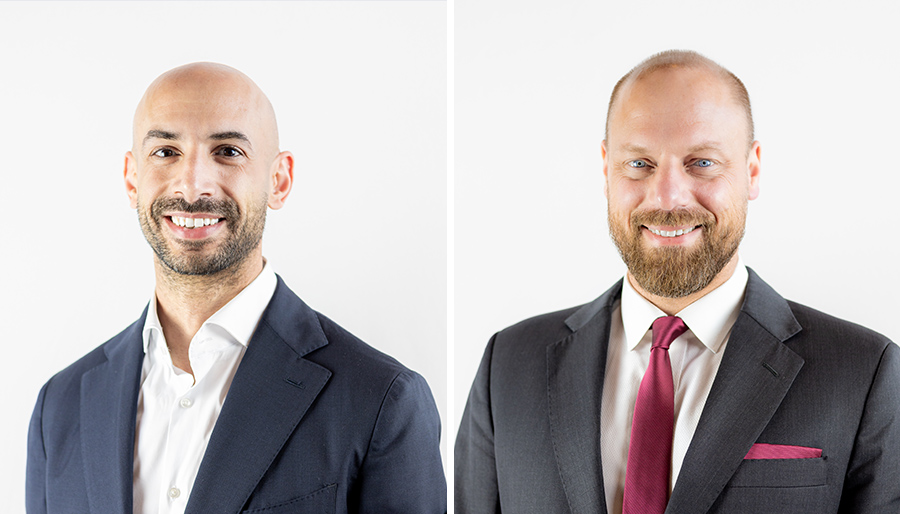
More than 1,000 board members and managing directors from 32 countries and 16 industries participated in Horváth’s latest CxO Priorities Study, offering insights into the key priorities shaping their boardroom agendas. We explore the report’s main findings and discuss their regional implications with Horváth Middle East leaders Saad Hamam and Patrick Braunschweig.
The global study examines what leadership teams at large international companies intend to prioritize over the next three years. This year, one topic has moved to the top of the agenda.
In the 7th edition of the study, AI and digital transformation rank first, ahead of cost and profit improvement, which topped the list last year. Cybersecurity holds third place.
Topics that have risen up the agenda include reorganization of processes and structures, supply chain optimization, mergers & acquisitions and strategic alliances, and innovation.
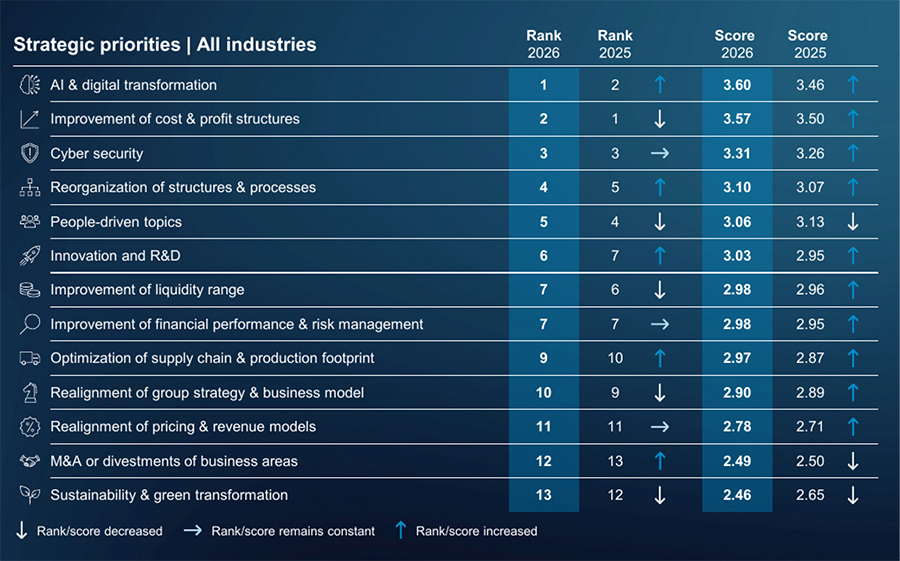
Saad Hamam, Partner and Managing Director for Saudi Arabia at Horváth, says that beyond the headlines, the movement behind the rankings is what matters most. In the case of AI, he points to a shift away from experimentation and pilot projects toward broader deployment and the pursuit of measurable business value.
“Companies have stopped widening the number of AI use cases and started pushing a smaller number into core operating processes. The question has shifted from where else can we try this to where does this pay.”
Where the investment gets stuck
That transition is not without its challenges. Almost every company in the study is investing in AI, but very few have completed the journey. Across all application areas, only a small share of respondents report scaled adoption or full integration. Progress is fastest in operational, administrative and customer service processes, and slowest in products and services.
Asked what is holding back progress in AI implementation, executives pointed to a series of challenges. Notably, these were primarily organizational rather than financial: data foundations, workforce capabilities and skills, process integration, and data security. Investment levels barely featured.
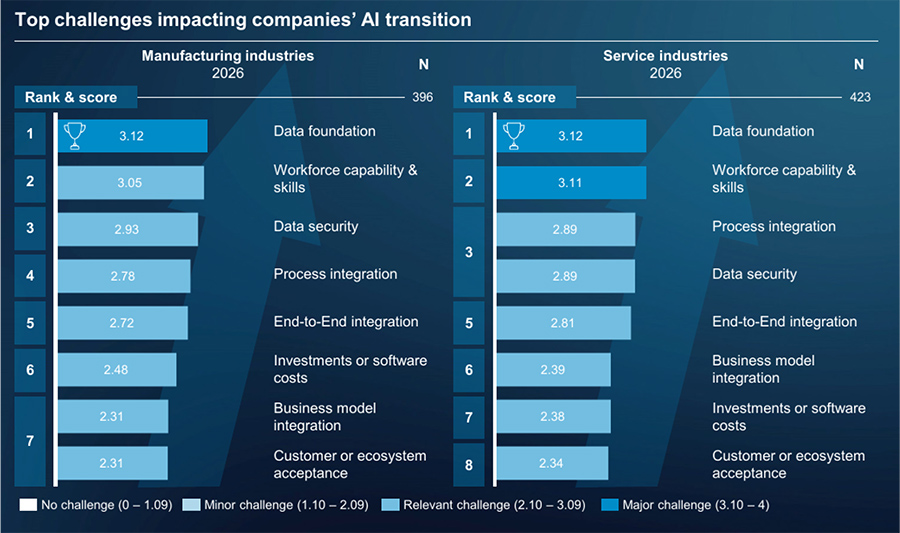
“The striking thing is not that AI leads the agenda,” says Hamam. “It is that the blockers executives named sit within a leadership team’s control. Data, capability and process respond to governance and disciplined delivery, which makes this a question of execution rather than technology.”
The regional signal
Patrick Braunschweig, Managing Director for the UAE at Horváth, notes that one finding from the global study takes on particular significance when viewed from Riyadh, Abu Dhabi or Dubai. Among the industries covered by the workforce analysis, 49% of companies plan to grow their Middle East workforce by 2030. Only 5% expect to reduce it.
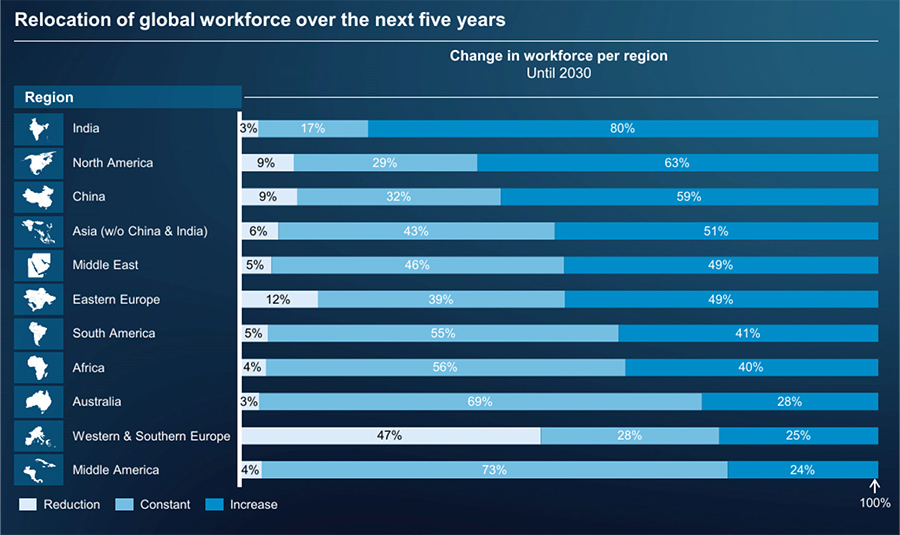
“Capacity is coming to the region,” he says. “The organizations that turn that into an advantage will be the ones that integrate it into how they actually operate, not simply the ones that hire fastest.”
That projection cuts both ways. It confirms that international talent and business activity are increasingly moving toward the region. It also raises the bar: the companies entering the market are among those reorganizing around AI and rebuilding their cost bases. For Gulf-based boards, the relevant benchmark is no longer just the strongest local competitor, but the global playing field.
From insights to action
The two Middle East leaders emphasize that the findings can help inform strategic priorities and policy decisions across the region. International benchmarking provides a valuable point of reference, allowing organizations to assess their own ambitions against global trends, challenge existing assumptions and refine their strategic goals.
“The value of international benchmarks like this is the conversation they force. Where does your agenda differ from what a thousand executives outside your market have concluded, and is that difference a deliberate choice? Which of the four blockers would your own teams identify, and what is being done about them this year rather than eventually? At Horváth, we support leadership teams as they navigate these boardroom-level questions.”