Bridging the financing gap is key for electrical vehicle adoption in emerging markets

One of the main bottlenecks facing the global electrical vehicle transition is no longer technological readiness or market demand, but a fundamental shortfall in commercial financing mechanisms across developing nations. That is according to a new report from the Future Investment Initiative Institute and Arthur D. Little.
As the green transition continues to change mobility around the world, electrical vehicle sales are continuing to increase and costs keep falling. In 2025, more than 20 million electrical vehicles were sold, which is one in four new cars.
Meanwhile, prices for batteries fell by 8% to reach around $108 per kilowatt-hour, while nearly 70% of battery electric cars sold in China were cheaper than the average conventional car.
Lack of funding in emerging markets
Though there has been rapid consumer adoption in fast-growing markets across Southeast Asia and Africa, the capital needed to support the shift has not followed at an equal pace. Developing economies outside China contain two-thirds of the global population, yet they receive under 30% of global energy investment. Africa, home to one-fifth of the world population, receives less than 3%.
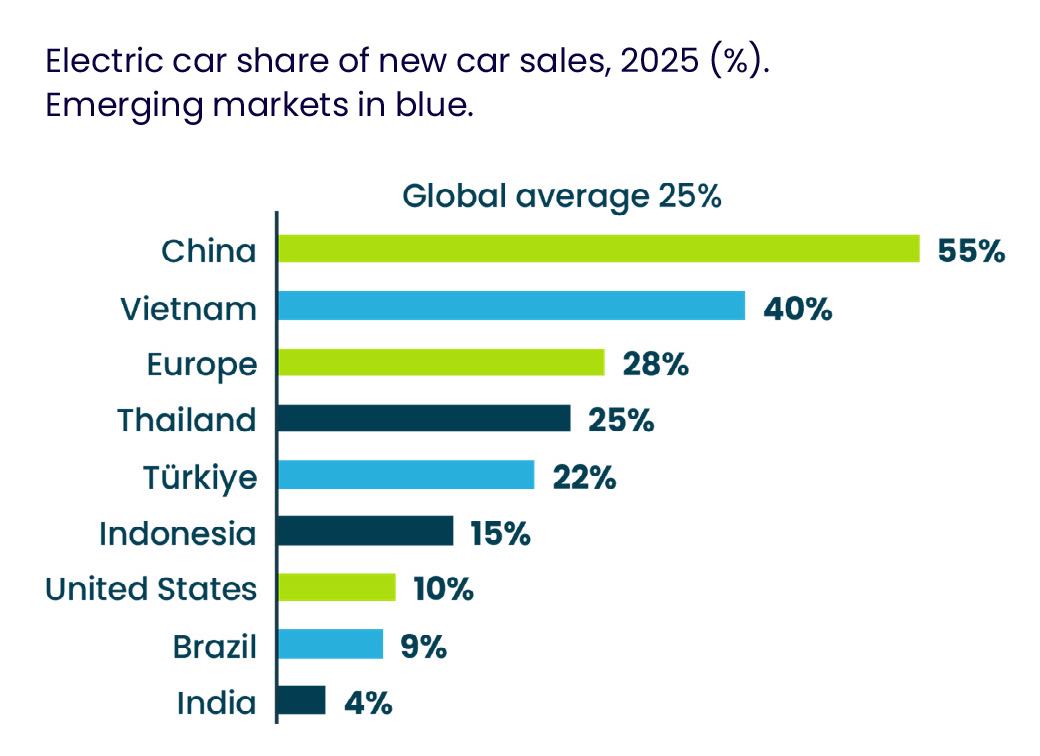
Despite Europe and the United States historically being the markets with the most electrical vehicle sales, Southeast Asia markets have now begun to outpace the United States. In addition, China leads the way in new sales, with electrical vehicles making up 55% of new cars sold. Emerging markets like Vietnam, Turkey, and Brazil are also seeing a relatively large amount of electrical vehicle sales.
The report notes that a lack of funding at the governmental level is not the main problem, but rather that everyday buyers and transport operators do not have access to credits. High borrowing costs, missing credit histories, and limited local banking infrastructure leave many emerging markets unable to finance the higher upfront purchase prices of electric transport.
Five key structural gaps slow global momentum
The Future Investment Initiative Institute and Arthur D. Little outline five primary obstacles preventing available capital from funding electric mobility on the ground.
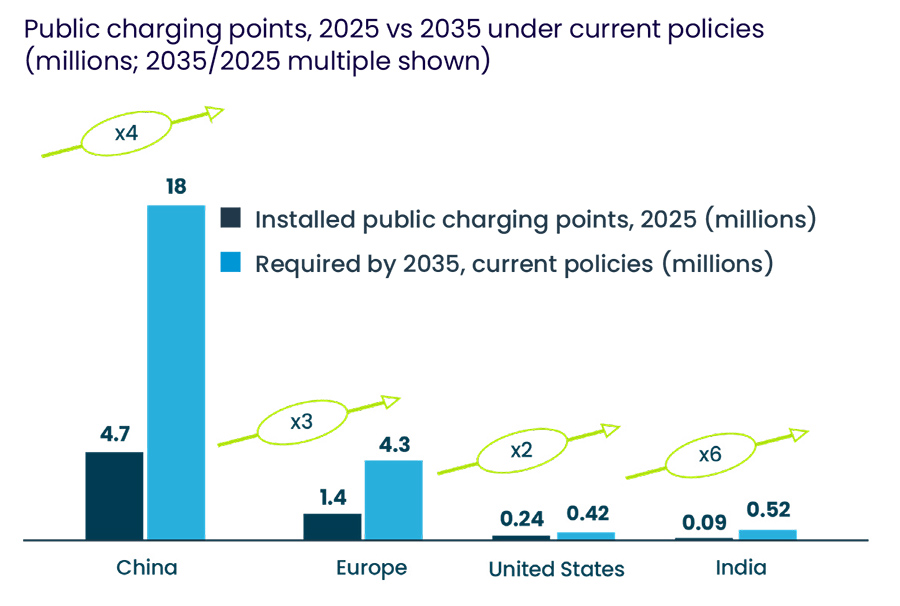
First, standard vehicle financing model mechanics are built for mature, lower-risk economies rather than developing markets. Secondly, charging networks face a commercial standstill, as private investors delay building chargers until electric vehicle usage is proven, while drivers hesitate to buy cars without guaranteed infrastructure.
The third obstacle is specialized risk mitigation tools like currency hedging and first-loss capital remain underutilized by major multilateral organizations. Fourth is the fact that global battery production remains concentrated heavily in China, which accounts for over 80% of battery cell production and 60% of vehicle sales.
Lastly, large government-owned investment funds have yet to step in as lead backers to make these risky projects attractive to traditional private lenders.
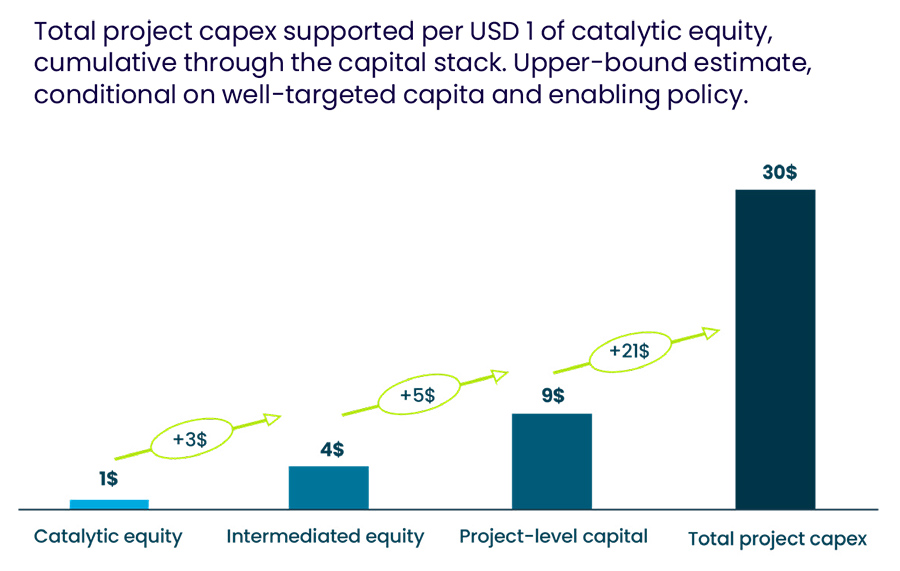
The report also stresses the important role of catalytic equity: An estimated $1 of risk-absorbing equity can support up to $30 of total project capital expenditure through a layered structure – an upper bound conditional on well-targeted capital and enabling policy, the report notes.
Strategic solutions to bridge the funding deficit
To resolve these bottlenecks, the report recommends several targeted actions. Local lenders can expand asset-backed pay-as-you-go credit options and battery leasing schemes, which structure payments around daily driver earnings. Governments and development institutions can also introduce temporary demand guarantees to de-risk early charging station installations.
Beyond that, development finance institutions can scale up dedicated currency hedging facilities to absorb foreign exchange risks for local banks. To reduce reliance on a single supply chain, a third regional industrial corridor can be established by combining African mineral resources, Middle Eastern logistics networks, and South Asian manufacturing facilities.
Sovereign wealth funds as catalytic partners
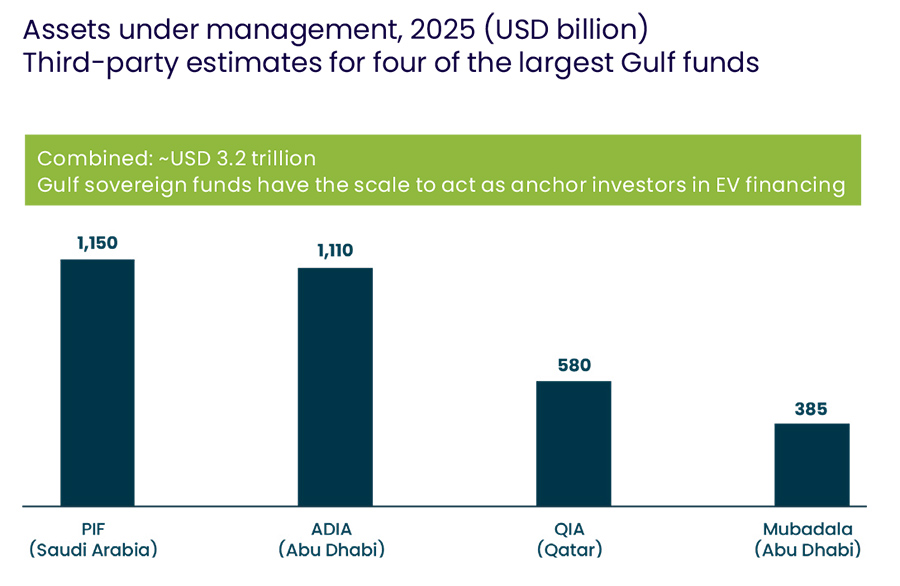
Finally, the report proposes creating a unified electrical vehicle transition financing platform backed by Gulf sovereign funds. Possessing over $3.2 trillion in combined assets, major sovereign wealth funds have the financial scale and long horizon necessary to absorb early risks.
Investment Gap
By committing anchor capital, these funds can help de-risk projects, cover currency fluctuations, and unlock far larger amounts of private sector investment. This unified approach offers a practical roadmap to shift from foreign currency loans toward sustainable local lending, ensuring the electric mobility transition reaches communities across the Global South.
“The analysis suggests that the electrical vehicle transition does not primarily require new pools of capital; it requires better mechanisms for deploying the capital that already exists,” said Joseph Salem, partner at Arthur D. Little.
“The Gulf has several of the ingredients needed to help bridge that gap – patient capital, industrial investment and logistics capabilities. Connecting those strengths with appropriate risk-sharing and financing structures could help make electrical vehicle investment across emerging markets more scalable and commercially investable.”