Sport’s next investment frontier will be guided by the operating model

Institutional capital has already established sport as a global asset class. The next investment frontier – emerging, rights-rich sports – will be unlocked not by bold bets alone, but by disciplined operating models, write Paul Lalovich and Vladan Dragosavac of Agile Dynamics.
In 2024, research from Agile Dynamics anticipated that tokenising real-world sports assets could open sport to cross-border capital. That expectation was built on the three main developments: franchise values had outpaced broad equity indices, banks were building dedicated sports finance teams, and tokenisation promised to lower the entry ticket for investors abroad.
Two years on, each of these three developments has held. Yet, what we underestimated back then was where the work would sit. It is not in the token. It is in governance, legal classification, servicing and valuation: the unglamorous machinery that turns a sports business into something an institution can hold.
Premium sport has been repriced accordingly. Minority stakes in major franchises now trade at multiples that compress forward returns, and leagues have widened their doors without dropping their guardrails. The NBA raised the number of teams a single fund may back from five to eight in December 2025, while keeping its 20% single-fund and 30% aggregate caps and denying funds any governance role.
In the top tier of the sports market, capital is not scarce – access is.
Five shifts in the capital stack
Five trends are reshaping how money reaches sport. First, sport has become a portfolio allocation for private equity, sovereign funds and family offices. Second, rights keep inflating: the average annual value of live sports TV deals has risen from about $18 billion in 2018 to an estimated $29 billion this year.
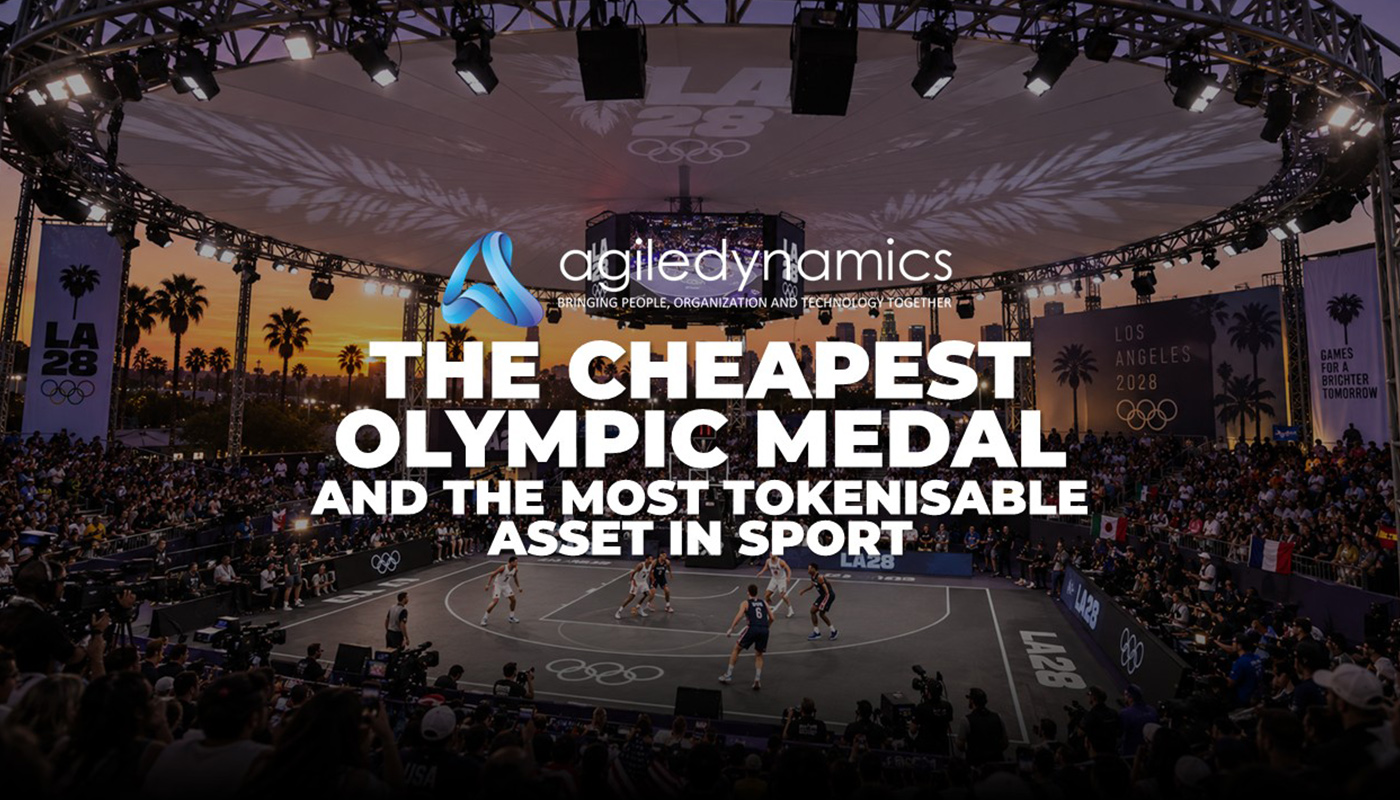
Third, betting and data add a measurable revenue layer, with US betting revenue forecast to reach $10.1 billion by 2028. Fourth, emerging formats are scaling; 3x3 basketball grows to twelve teams per gender at 2028 Summer Olympics in Los Angeles. Fifth, tokenisation has gone regulated.
That last shift matters most. Regulators have converged on substance over form. Hong Kong’s securities regulator applies a same-business, same-risks, same-rules test and in April 2026 opened a pilot for round-the-clock secondary trading of tokenised authorised products on licensed platforms.
EU supervisors treat tokenised securities under MiFID II and the prospectus regime, with the DLT Pilot Regime offering a route to on-chain trading and settlement. First-wave fan coins, sold on emotion and resale hopes, sit outside this convergence.

Value is moving below the franchise tier
The gap in sports capital is not appetite. It is investable supply. Clubs in 3x3 basketball, women’s sport, academies and event franchises need growth capital in tickets far too small for private equity economics and far too serious for a fan-token marketplace. A 3x3 club needs no stadium and no thirty-player squad; it needs working capital, athlete contracts, event access and a credible operating team. Its rights can be ringfenced and modelled.
Two questions decide whether a sports instrument creates value: what legal right it carries, and how well its issuer is run. The durable position combines both, with a governed issuer, a regulated security, a digital registry and controlled liquidity. Tokenisation lowered the cost of issuing a sports security. It did not lower the cost of deserving investor trust.
The operating model is the moat
A digital sports exchange fails when it tries to be excellent at everything. It should win on five distinctive capabilities: sports underwriting, rights structuring and classification, compliant distribution and servicing, registry and transfer control, and valuation and disclosure. Payments, hosting, general marketing and standard KYC tooling are table stakes and should be partnered under service levels.
The organisation should run at two speeds. The issuer launchpad, investor portal and fan membership layer move fast. Registry, custody, compliance and valuation change deliberately, behind a narrow interface: an instrument standard with embedded transfer rules, a shared investor identity and a data contract. Each club, event or academy sits in its own vehicle, so one underperformer cannot contaminate another.
Decision rights need the same discipline. Every vital decision, from admitting an issuer to setting a valuation mark, should have exactly one accountable owner. The fragile hand-offs are predictable: origination to underwriting, structuring to servicing, and sporting operations to investor reporting. An issuer success lead who owns each issuer end to end holds those seams together better than any new approval gate.
Jurisdiction is a design choice
Several crypto-progressive jurisdictions now offer credible homes. An EU hub such as Cyprus or Malta reaches European investors through passporting. Hong Kong opens Asian institutional and wealth channels. The UAE’s financial free zones sit next to sovereign and family office capital. None is a strategy on its own.
The pattern that works is hub and spoke: one regulated hub for licence, registry and servicing, with other markets reached through passporting or licensed partners. The choice should turn on where target investors are, how quickly a licensed partner can be contracted, and whether the regime supports the intended liquidity model.
Premium leagues come last
The product ladder should start where rights are cleanest: emerging sport securities and contracted revenue notes. NBA-linked notes and exposure to clubs competing in the UEFA Europa League belong on a later rung, for institutional investors only. They give economics, never ownership recognised by the league, and depend on league and club consent to the full ownership chain. Governing bodies such as FIBA and UEFA regulate sport; they are never the listed asset.
The economics reward patience. An exchange earns on issuance and servicing, not trading volume, so recurring administration income is the metric that separates a platform from a deal shop. In our illustrative base case, recurring revenue rises from 12% to 34% of the total within five years, and capital is released in gates tied to the first regulated close.
Key takeaway
Sport no longer needs to prove it is investable. Its emerging layer needs to prove it is operable: sports underwriting joined to securities-grade servicing, one owner per decision, and a regulatory hub chosen for reach rather than headlines.
About the authors: Paul Lalovich is Managing Partner of Agile Dynamics, a management consulting firm with offices in the UAE, Singapore and the Americas. Vladan Dragosavac founded the Sports Management practice at Agile Dynamics after more than 15 years in the sports industry.