Mondial & Co helps consumer goods company get automation investment back on track

Following the rollout of a new logistics system, a regional consumer goods distributor faced a classic problem: a sophisticated system, but adoption was lagging. Mondial & Co was brought in to help turn the situation around, resulting in stronger capabilities, greater system utilisation and a more solid foundation for the company’s growth agenda.
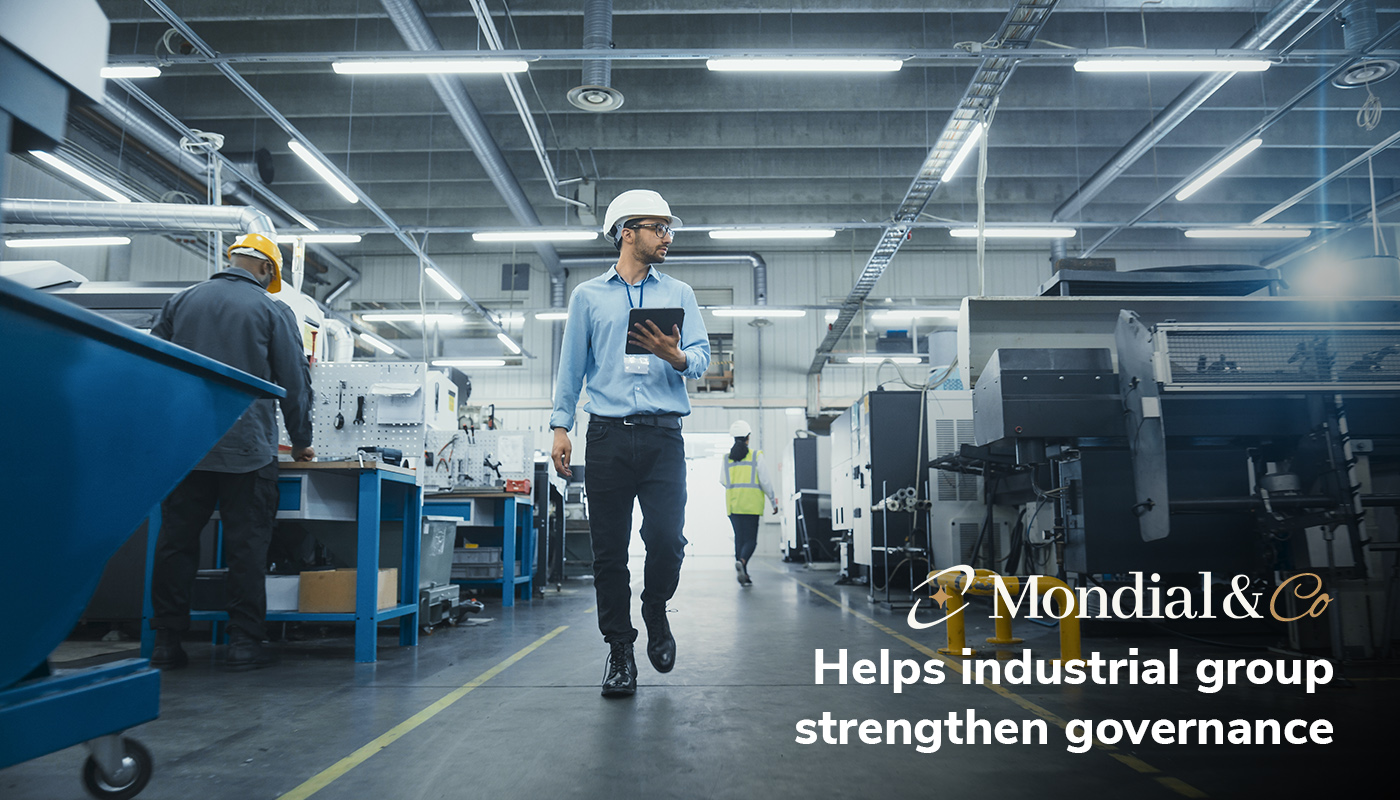
The company at the centre of the client case is a regional consumer goods distributor serving both retail and online channels. In line with its aim to expand into a neighbouring international market, the company invested in a new automation layer across its distribution operation, anticipating higher order volumes and more complex fulfilment requirements.
The investment spanned several areas of the distribution operation, including intelligent sorting, scanning and automated handling systems. With this investment, the company expected to increase throughput, reduce manual processing and give the business enough capacity to support expansion without proportionally increasing headcount.
Those ambitions, however, did not materialise. Several months into the transition, a significant share of the automated workflow remained unavailable or was being used inconsistently. Employees could perform basic tasks but struggled with system feedback, exception handling, calibration and fault response. When problems occurred, teams frequently reverted to manual processes.
“The technology had been installed, but the operating capability around it had not developed alongside it,” said Mondial & Co, which was brought in to help resolve the matter.
To make matters more complex, the management structure amplified the problem. Responsibility was divided between operations, technical support and senior management, without clear ownership of overall system performance. As a result, decisions on training, technical intervention and daily fulfilment priorities moved slowly between functions.
As a result, the company was processing approximately 40% of the volume the upgraded operation had been designed to handle. Labour remained tied up in manual workarounds, service reliability was beginning to deteriorate, and the efficiency gains expected from the investment had not materialised.
The diagnostic
To gain a clear understanding of the root causes of the issues, Mondial & Co kicked off its engagement with a two-week diagnostic covering the operation, workforce, management structure and short-term financial position.
The first phase mapped the fulfilment process from order release through picking, handling, sorting and dispatch. It reviewed system utilisation, recurring exceptions, operating procedures and maintenance records, while staff interviews and on-floor observation were used to distinguish technical limitations from capability gaps.
The second phase extended the diagnostic into management and financial exposure: who owned decisions when the system failed, where escalation stopped, what additional expenditure the recovery could absorb, and how much time the business realistically had before liquidity began to constrain its options.
The findings shed new light on the situation and guided the direction of the resolution. “The automation itself was largely functional, with the principal constraint not the technology – but the operating model around it,” said Mondial & Co.
In other words, the business lacked standardised exception procedures, employees had limited confidence in responding to system faults, training had focused on basic operation rather than independent problem-solving, and there was no clear end-to-end ownership of fulfilment performance.
The improvement process
An improvement programme was set up, centred around three parallel workstreams over a six-week period.
The first built operating capability around the technology itself. Rather than recommending additional automation or an immediate permanent technical hire, the engagement focused first on extracting value from the systems already installed.
A specialist with relevant automation experience was brought in for a short, fixed-term intervention to work alongside the internal team. Starting with the fundamentals, the specialist covered system feedback, common exceptions, safe fault response, calibration principles and the relationship between automated and manual stages of the process, before moving on to live workflows.
A small group of employees worked directly alongside the specialist, progressing from observation to supervised troubleshooting and finally to independent operation. Recurring faults and exceptions were documented as they occurred and converted into practical operating procedures that the wider team could follow.
“The objective of this workstream was not to make the operation dependent on external technical support, but to leave enough capability inside the business for routine issues to be identified and resolved internally,” noted the consultancy.
The second workstream established clear operational ownership. As technology performance had previously sat between functions, Mondial & Co’s consultants helped consolidate day-to-day accountability under a single fulfilment lead responsible for system utilisation, throughput, recurring exceptions and workforce capability.
Clear escalation thresholds were also established so employees knew which issues they were expected to resolve themselves, which required management intervention and which genuinely justified external technical support. “The change was deliberately simple: the business did not need another layer of management, it needed clarity over who could make decisions.”
The third workstream connected the operational recovery to the cash runway. Mondial & Co developed a rolling weekly picture of cash inflows, operating obligations and the additional costs associated with the recovery, and mapped operational milestones against that runway to establish how quickly throughput needed to improve for the business to relieve immediate liquidity pressure.
This enhancement gave management a practical basis for sequencing decisions and communicating the recovery trajectory to key external stakeholders. It also guided the company’s investment roadmap, ensuring that investments were only released once the operation was ready for them – that is, once it could support additional volume.
Reaping the benefits
Several months down the line, the consumer goods distributor began to reap the benefits. “Following the intervention, employees began operating the automated workflows independently, and within the next two weeks throughput recovered to approximately two-thirds of the system’s designed daily capacity.”
“Over the following month, performance continued to improve as employees became faster at resolving routine exceptions and the number of unnecessary manual interventions declined, with throughput moving above 80% of designed capacity while service consistency improved.”
Twelve weeks on from the intervention, the operation was processing just over 90% of its designed daily throughput, the automated workflow had become the default rather than the exception, and routine faults were being handled internally without recurring external call-outs.
As throughput recovered, the immediate working capital pressure identified at the start of the engagement materially receded. Management also had a clearer view of the relationship between operational performance and cash requirements, allowing investment decisions to be made against an actual recovery trajectory rather than assumptions.
The outcome changed the basis on which the company steered its international growth ambition: management was now well positioned to focus on the expansion plan with the right foundations in place.
The key learning
According to Mondial & Co, which has extensive experience with complex organisational transformations across the Middle East, the key learning from this specific engagement is that technology upscaling requires organisational upscaling to happen hand in hand. A gap between the two can lead to significant operational and financial challenges.
“Investing in new technology without ensuring that the organisation, operating model, people and ways of working are ready to support it can turn a promising transformation into a costly missed opportunity.”
Headquartered in Türkiye, Mondial & Co delivers consulting projects around the Middle East.