Türkiye’s role as a manufacturing and logistics base for Gulf markets
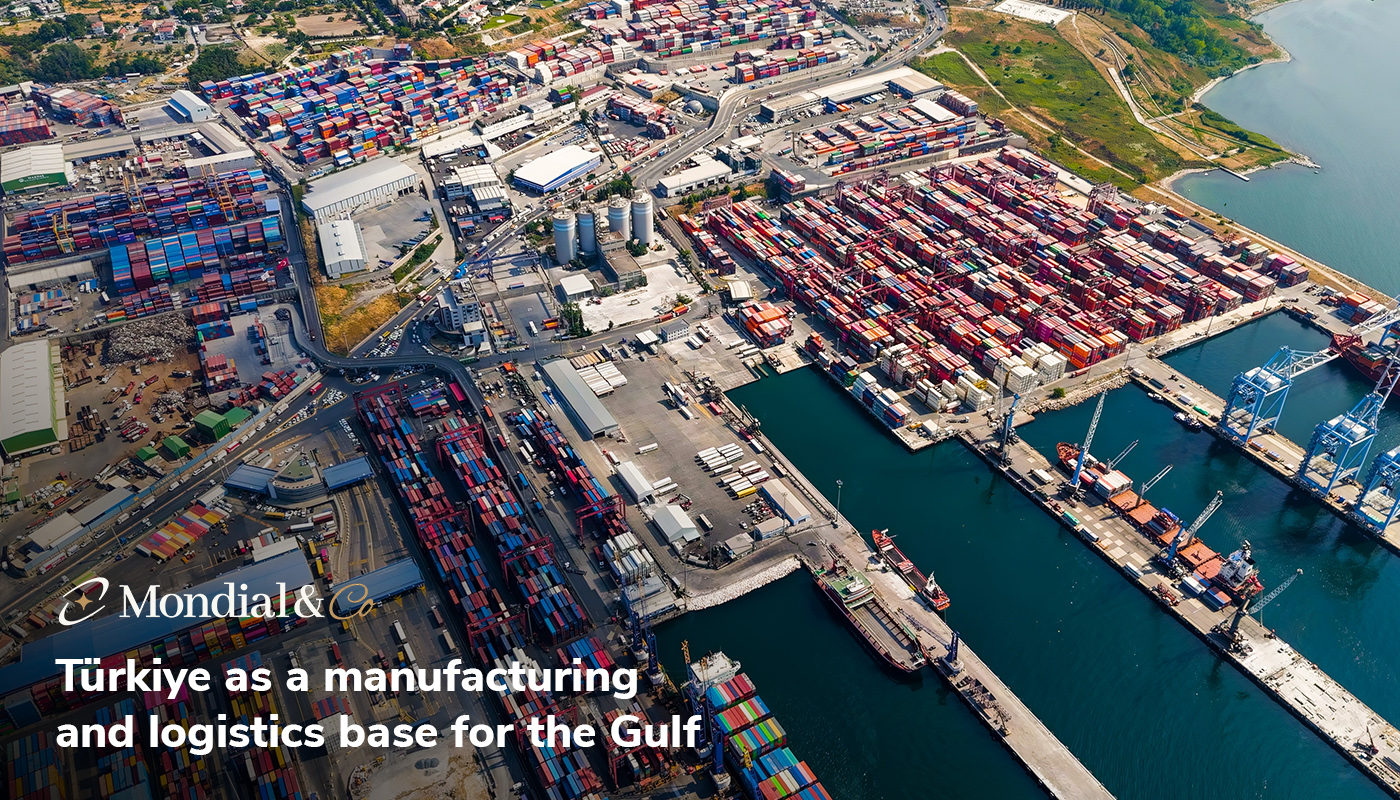
Türkiye is emerging as an increasingly attractive manufacturing and logistics hub for companies serving Gulf markets, supported by its industrial capabilities, geographic proximity and expanding trade corridors. Experts from Mondial & Co explore how businesses can capitalise on these advantages, while navigating the complexities of supply chains, market access and local regulations.
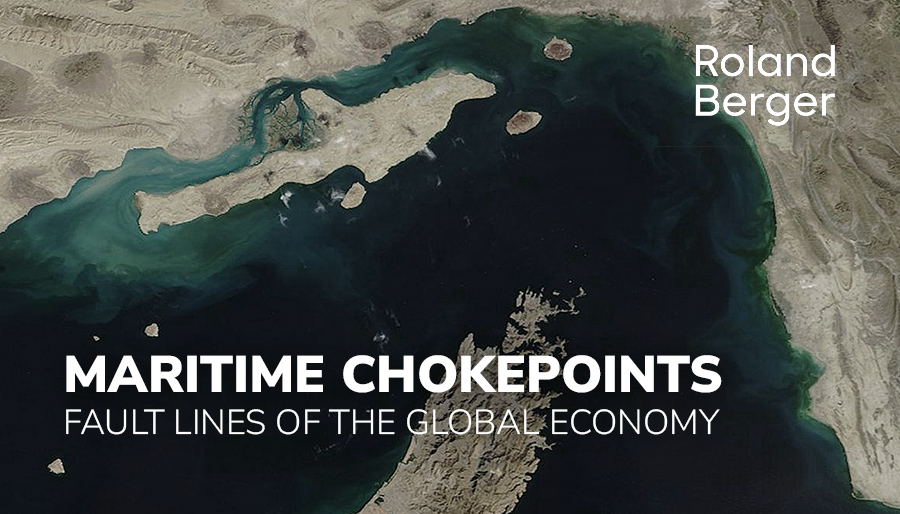
Consider a distributor in Riyadh supplying supermarkets with packaged food and personal care products. Until this year its stock came by sea from Asia into Dammam on a routine replenishment cycle. When commercial traffic through the Strait of Hormuz collapsed at the end of February, those containers stopped moving, and by July the Houthi blockade of Saudi Arabia’s Red Sea ports had put the alternative gateway under pressure as well.
Many Gulf companies spent 2026 in some version of that position, and the trade data show where demand shifted. Türkiye’s exports to the Gulf region fell 37% in March as shipping stalled. Between January and July, shipments to the UAE dropped 48%, while exports to Saudi Arabia rose 10% and those to Oman rose by almost 30%, both markets with port access beyond the Strait.
In June, Turkish exports to the six GCC states climbed 36% to $827 million and shipments to Saudi Arabia more than doubled to $425 million.
The same distributor sourcing from a manufacturer in Gaziantep can receive goods in Riyadh by road in three to four days, the transit time the Trade Ministry now quotes for Gulf destinations. The road was already the backbone of this trade before the war: Türkiye’s exports to the Gulf region approached $31 billion in 2025, and 44.3% of that volume moved by truck.
That proximity is the core of Türkiye’s value proposition as a base for GCC markets. It rests on an industrial base that shipped $25.9 billion of goods in October, a record for the month, with higher technology products accounting for 44% of manufacturing exports, up from 30% in 2002.
Tracing that order from factory to shelf shows where a Türkiye base creates value and where the operating model needs careful design.
At the factory
Site selection is the first decision, and the corridor favours locations close to the southern border. A plant in Gaziantep or around Mersin sits a short drive from the crossings into Syria and Iraq and close to the ports of Mersin and İskenderun for sea freight. Exporters in the southeast, centred on Gaziantep, grew shipments 6.7% to $9.4 billion in the first nine months of this year.
Türkiye’s cost competitiveness has eroded over the past two years as unit labour costs rose faster than the lira adjusted; inflation was still above 30% in mid-2026, and labour-intensive sectors have absorbed most of the pressure. In September, exports rose 15.4% in value while volumes slipped 0.6%. We therefore build the business case on landed cost in the Gulf, in dollars, using current wage and energy inputs, and stress test it against several exchange rate scenarios.
On the loading dock
Portfolio segmentation determines what travels by road. Truck freight carries a higher cost per tonne than sea freight, so the decision turns on value density and time sensitivity. Fresh and chilled food, apparel replenishment, cosmetics, pharmaceuticals, spare parts and components for projects on fixed schedules can absorb the premium, while bulk materials and low margin lines belong on the sea route.
Route choice moves cost materially: when Turkish hauliers had to divert through Iraq in the past, the detour added up to $5,000 per load. On the seaside, direct sailings from Mersin reach Jeddah in about four days port to port, so the case for road rests on door-to-door reliability and on reaching the Eastern Province, Kuwait, Qatar and the UAE without passing through Hormuz. Substitution headroom is visible in the category data: Saudi Arabia imports around $3.7 billion of furniture a year, with China supplying $1.3 billion and Türkiye
$161.5 million in 2024, fifth among suppliers. Turkish furniture exports to the Kingdom then rose 17.7% in the first seven months of 2025, driven by construction projects.
At the border
Market access terms determine whether the landed cost holds. Türkiye’s Comprehensive Economic Partnership Agreement with the UAE has been in force since September 2023, and bilateral trade excluding oil reached $45.2 billion in 2025, almost three times its 2022 level. An agreement with Qatar is also in force, while negotiations for a full free trade agreement with the GCC, opened in 2024, are currently in process.
Rules of origin drive the duty outcome, so a product assembled in Türkiye from imported components requires a bill of materials review before the business case assumes preferential tariffs. On conformity, Saudi Arabia’s SABER platform, Gulf technical regulations and halal certification all apply, and the memorandum signed in 2025 between the Saudi Food and Drug Authority and Türkiye’s Halal Accreditation Agency points toward closer coordination between the two halal systems.
On the road
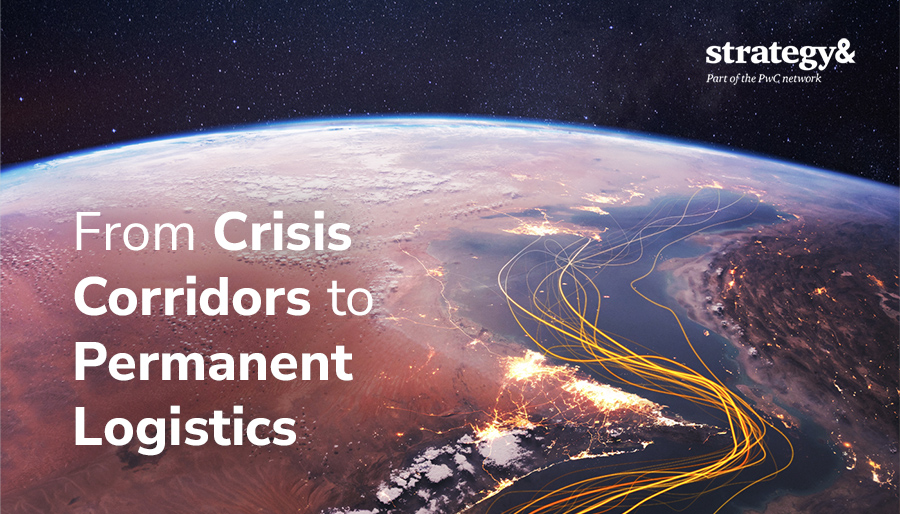
Three routes carry freight today, and two rail projects will shape the corridor over the next decade. The land route through Syria and Jordan has reopened since the change of government in Damascus; before the Syrian war closed it, Turkish trucks made up to 50,000 journeys a year to the Gulf this way. Transit through Saudi Arabia resumed in April, once a visa issue for Turkish drivers that had been open for a decade was resolved, and a second land route through Iraq has carried transit traffic since mid-April.
Overland capacity is finite, constrained by border dwell times, driver visas, security and fuel costs, so we design every product line for dual routing, with the second route specified from the outset. That discipline holds whatever the outcome of the current talks on Hormuz: Iran’s terms for reopening include formal recognition of a shipping lane designated by Iran and Oman, which would keep a risk premium on Gulf maritime trade.
The longer-term options are moving from intent to planning. Saudi Arabia and Türkiye signed memorandums on railway and logistics cooperation in June, with a joint feasibility study for a line through Syria and Jordan due by the end of 2026, and two trial freight runs from Türkiye through Iraq to Saudi Arabia have already been completed. In September, Iraq and Türkiye completed the draft framework agreement for the Development Road, a $17 billion rail and road corridor whose first phase is scheduled to conclude in 2028.
In the Gulf
The final stage of the value chain often belongs inside the market. Saudi Arabia’s localisation agenda rewards local content, and the incentive architecture strengthened this year. Regulations for four special economic zones took effect in April 2026, offering a 5% corporate income tax rate for up to 20 years against the standard 20%, zero withholding tax on repatriated profits and customs relief on capital equipment and inputs.
Turkish defence manufacturers are already building capacity in the Kingdom, including joint production of the Gökbey helicopter agreed in February. Capital flows in the other direction as well: ACWA Power’s 5 GW renewable programme in Türkiye requires at least 50% local content, and its 3 GW second phase has been signed at COP31.
The operating model that emerges for most manufacturers is a split value chain, with component production, processing and engineering in Türkiye and final assembly, packaging, labelling or warehousing inside a Saudi or UAE zone. This structure meets local content expectations, compresses lead times on the last mile and keeps capital intensive processes where the industrial base is deepest.
For the Riyadh distributor, the target model might combine a supplier near Gaziantep shipping fast moving lines by road, base volume arriving through Jeddah, and labelling and storage in a warehouse near Riyadh. The value lies in designing these elements as one system.
Getting the structure right
The complexity lies in the integration: the information sits across ministries, forwarders, customs brokers, zone authorities and distributors, often in Turkish or Arabic, and it shifts month by month. We approach these mandates in three phases. A diagnostic builds the landed cost model for at least two routes per product line and screens candidate sites in Türkiye and zones in the Gulf before any capital is committed.
Partner qualification then runs in parallel at both ends of the corridor, since reliability depends on every handover. Finally, a pilot at limited volume tests customs, transit and certification in live conditions before the full investment is released.
This year has shown Gulf buyers the value of suppliers who can reach them by more than one route. Türkiye is well placed to fill that role, and the companies that establish their position now, while trade terms and corridors are still taking shape, will be the ones Gulf customers turn to first.